
Leading AR VR Game Development Agency In Florida
You are not here to browse. You are here because something is not working. You have an idea or a partially built AR VR game that is costing money without progress. You have worked with developers who disappear mid sprint. You have sat through strategy calls that sound polished but deliver nothing. Time and budget have already been wasted.
We step in when projects stall.
Pearl Lemon Games builds AR VR games that move from concept to completion with clear execution. We work with clients who expect delivery that meets technical requirements, passes QA, and performs as intended.
Whether you are preparing for the Oculus store, building internal VR simulations, or launching location-based AR gaming in Florida, every build is handled with structured development, consistent communication, and defined milestones.
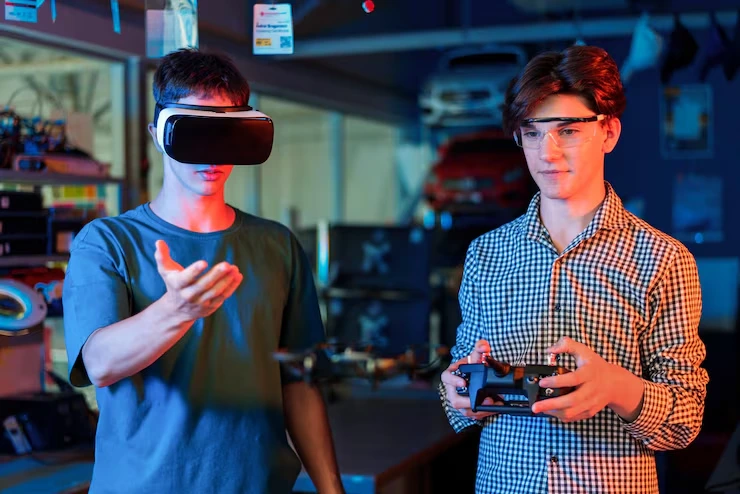
Our AR VR Game Development Services In Florida
We have developed AR VR games for businesses in Florida and across the UK. Our services are built to solve common development challenges with clear, measurable outcomes. Every stage is structured around delivery, performance, and technical accuracy.
If previous projects have failed to meet expectations, our services focus on identifying what went wrong and executing a build process that stays on track from start to release.
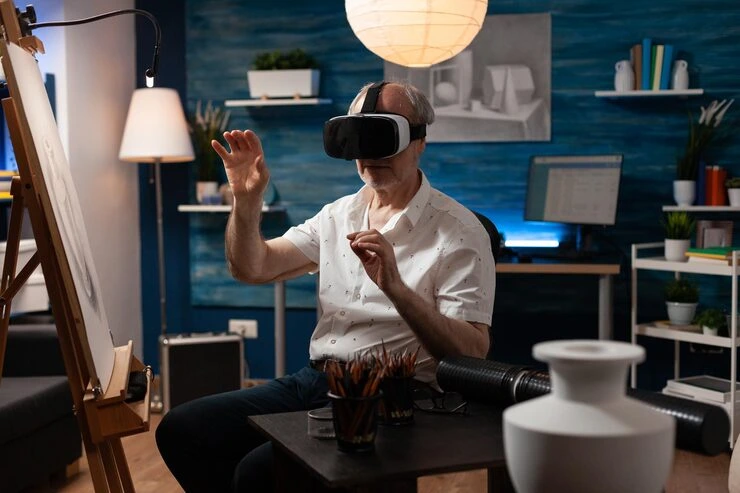
Concept Design And Interaction Mapping
Most AR VR projects fail at the mechanics stage. Interaction cannot be improvised in spatial computing. We build a clear logic structure from the start using Unity, Unreal Engine, and 3D UX prototyping tools like Tilt Brush and ShapesXR.
We define the field of view, map gaze-based triggers, and configure collision systems based on your game type. For gesture-controlled or haptic-integrated experiences, we build structured wireframes that stakeholders can review early in the process.
This approach removes ambiguity, reduces rework, and keeps development aligned with a clear execution plan.
Problem solved: Prevent wasted development cycles caused by unclear mechanics and avoid builds that fail before completion.
Cross-Platform Game Development
Most AR VR developers build for a single platform. As a cross-game development agency, we build for multi-platform deployment from the start. From Meta Quest 3 to Apple Vision Pro, including WebAR, ARCore, and ARKit, your project is structured for broad compatibility.
You are not restricted to one headset or operating system. We use deployment pipelines with the XR Interaction Toolkit in Unity and XR frameworks in Unreal Engine, so your build is ready across devices and app stores.
Problem solved: Build once, deploy across multiple platforms without repeated development for each device.

Spatial Audio And Haptic Integration
VR without sound design is a liability. AR without tactile feedback? Flat and forgettable. We build immersive environments using middleware like FMOD, Wwise, and advanced haptic APIs from Lofelt and Ultraleap. Our sound design pipeline includes occlusion modelling and dynamic range balancing for hardware like Oculus and PSVR.
Problem solved: Improve retention and reduce simulator sickness through sensory balancing.
Multiplayer Synchronisation And Netcode
Whether you are building a two-player AR experience or a full-scale VR MMO, multiplayer architecture can break performance if latency is not controlled. As a multiplayer game development agency, we build stable netcode using Photon, Mirror, and Epic Online Services.
We implement client prediction, rollback systems, and authoritative server models to maintain consistent gameplay across sessions. Every interaction is structured to reduce lag and maintain synchronisation between players.
Problem solved: Stable multiplayer performance with no rubber banding, no ghosting, and no desync.

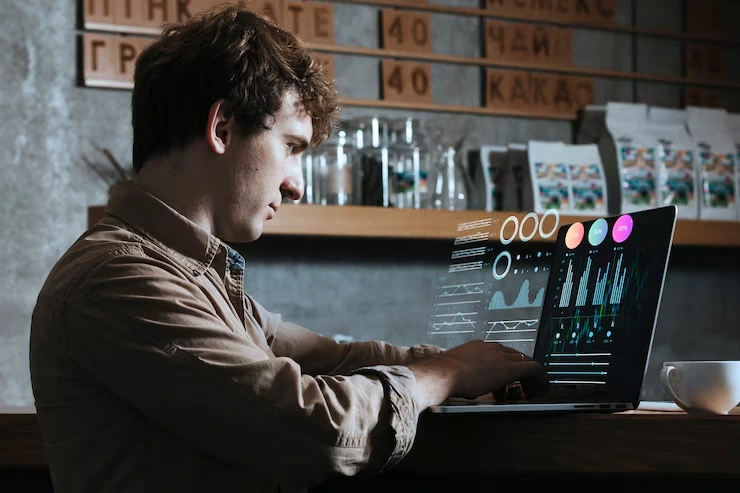
Analytics And Heatmapping
Most games die because you don’t know what’s wrong. We integrate analytics from day one. Using Unity Analytics, Firebase, or custom OpenTelemetry stacks, we track session time, drop-off points, heatmaps of player gaze and movement, and crash traces. We tie gameplay metrics directly into your feedback loop.
Problem solved: Get the data to fix user flow, not just guesses from playtesting.
Monetisation Strategy Integration
Freemium AR VR games fail when monetisation is added as an afterthought. Revenue systems must be built into gameplay from the start. We implement non intrusive monetisation models such as rewarded AR experiences, gaze based offers, and tiered unlock systems that align with user interaction.
Using Microsoft PlayFab or custom in app purchase integrations, we connect monetisation directly to core gameplay loops. Every element is structured to support user engagement while maintaining immersion.
This ensures revenue generation is part of the experience, not an interruption.
Problem solved: Monetisation is built into gameplay systems from day one, removing the need for late-stage fixes.


QA For Spatial And Interaction Bugs
This isn’t mobile. Testing AR/VR games takes a real-world setup. We run test scripts on Oculus, Android, iOS, and WebXR headsets, and test interactions with different lighting, space constraints, and hardware specs. Our QA pipeline includes regression tests, build verifications, and scene-by-scene breakdowns.
Problem solved: Catch interaction bugs and platform-specific crashes before your players do.
LiveOps And Content Delivery Pipelines
Shipping the game is just the start. We handle post-launch content delivery using remote asset bundles, content versioning, and A/B variant testing. With CI/CD pipelines built into Unity Cloud Build or GitLab CI, we ensure your game scales without breaking.
Problem solved: You don’t need to recompile every update. Roll out patches and content in hours, not days.


Why Choose Our AR VR Game Development Company?
We don’t talk in circles. We talk code, builds, bugs, and delivery. We’ve taken over broken VR projects and turned them around. We’ve launched from scratch with lean teams and hit every deadline. We build for people who need things to work, not just promises.
Schedule a consultation and get clear answers in 20 minutes. No fluff. Just facts.
Frequently Asked Questions
Typical time to first playable version is 6 to 12 weeks, depending on the scope. Fully featured MVPs range from 3 to 6 months.
We primarily work in Unity for speed and cross-platform capability. For higher fidelity or console targets, we use Unreal Engine. Choice depends on hardware targets and gameplay complexity.
Yes. We regularly integrate external 3D models, animation rigs, and existing Unity packages into new builds. All assets undergo compatibility checks.
We use abstraction layers (Unity XR Toolkit or Unreal’s XR framework) and test builds natively on each platform—Quest, Vision Pro, WebXR, Android, and iOS.
Firebase, Unity Analytics, custom Postgres + Grafana stacks, and raw telemetry piped through OpenTelemetry or REST endpoints.
Book A Call And Get Your Build Moving
You do not need another proposal or another pitch filled with jargon. You need clear answers and a defined path forward. Whether your project is stalled mid build, preparing for investor demos, or moving toward version one, we step in with direct input that moves things ahead.
We assess your current build, identify gaps, and outline the next steps required for release. Every recommendation is based on execution, timelines, and technical feasibility.
Book a consultation to speak with a team that builds and delivers AR VR games ready for launch.
